
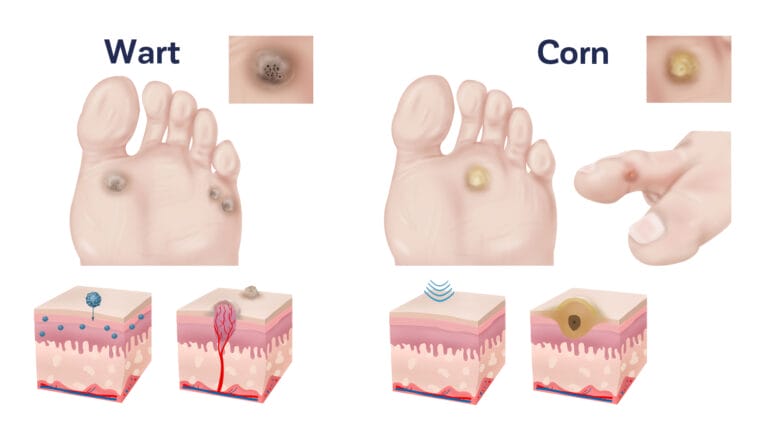
Are you dealing with a painful spot on your foot and wondering whether it’s a verruca or a corn? The difference between a verruca and corn is crucial because they have different causes, symptoms, and treatments. A verruca is a viral infection caused by human papillomavirus (HPV), while a corn is a thickened area of skin resulting from repeated friction or pressure. Misdiagnosis is common, but knowing the key distinctions can help you choose the right treatment and prevent spreading the virus.
How to Tell a Verruca from a Corn: Current Diagnostic Methods
Dermatologists today use several reliable methods to distinguish between a verruca and a corn. The most common tool is dermoscopy, a handheld magnifying device with a light that reveals characteristic features. Under dermoscopy, a verruca often shows tiny black dots, which are actually clotted blood vessels. These dots are absent in corns. Another key difference is the pain pattern: verrucae are typically painful when squeezed from the sides, whereas corns hurt when direct pressure is applied to the center. Recent studies from 2023 have identified that HPV types 1, 2, and 4 cause most plantar verrucae, reinforcing the viral nature of the condition. Public records covering this story are gathered in What's the Difference Between a Corn and a Verruca?
Behind the Scenes: How Verrucae and Corns Develop
The difference between a verruca and corn begins at the cellular level. A verruca forms when HPV enters the skin through tiny cuts or abrasions, often on the soles of the feet. The virus causes rapid growth of skin cells, creating a rough, raised lesion. In contrast, a corn develops as a protective response to mechanical stress. When shoes rub or bones press against the skin, the body produces extra layers of dead skin cells to shield the area. This process is purely physical and involves no infection. The term “verruca” comes from Latin for “wart,” first used medically in the 16th century. Corns have been described since ancient times, with treatments recorded by Hippocrates. Understanding these origins helps clarify why verrucae are contagious and corns are not.
| Feature | Verruca | Corn |
|---|---|---|
| Cause | HPV infection | Friction or pressure |
| Contagious | Yes | No |
| Pain type | Squeeze from sides | Direct pressure |
| Black dots | Often present | Absent |
| Common in | Children, swimmers | Adults, athletes |
Timeline of Key Moments in Understanding Verrucae and Corns
The medical understanding of verrucae and corns has evolved over centuries. In ancient Greece, Hippocrates described corns and recommended soaking feet and using a pumice stone. The term “verruca” entered medical Latin in the 16th century, but the viral cause was not discovered until the 20th century. In 1907, Giuseppe Ciuffo demonstrated that warts could be transmitted by a filterable agent, later identified as HPV. By the 1970s, researchers had classified HPV types, linking specific types to plantar warts. For corns, treatment milestones include the introduction of foam pads in the 1950s and modern orthotic devices. Today, podiatrists use advanced imaging like ultrasound to assess deeper tissue involvement.
What Is Confirmed and What Remains Unverified About Verrucae and Corns
It is well established that verrucae are caused by HPV and are contagious, while corns are non-contagious and result from mechanical stress. The presence of black dots (thrombosed capillaries) is a reliable sign of a verruca, though not all verrucae have them. Corns always lack these dots. However, some claims remain unverified. For instance, the idea that verrucae can be cured by duct tape occlusion therapy has mixed evidence; some studies show benefit, others do not. The effectiveness of home remedies like apple cider vinegar is not supported by rigorous research. Additionally, the exact prevalence of verrucae in swimmers is often cited but precise statistics vary. Misdiagnosis between the two conditions is still common, especially among non-specialists. If you are uncertain, a dermatologist can provide a definitive diagnosis using dermoscopy.
Frequently Asked Questions
Can a verruca be mistaken for a corn?
Yes, misdiagnosis is common because both appear as thickened skin on the foot. However, a verruca often has tiny black dots and is painful when squeezed from the sides, while a corn has a hard central core and hurts with direct pressure. A dermatologist can use dermoscopy to tell them apart.
What is the main difference between a verruca and a corn?
The main difference is that a verruca is a viral infection caused by HPV, making it contagious, while a corn is a non-contagious buildup of dead skin from friction or pressure. Verrucae may also have black dots and a different pain pattern.
How does treatment for a verruca differ from treatment for a corn?
Verruca treatment targets the virus and includes cryotherapy, salicylic acid, or immune therapies. Corn treatment focuses on relieving pressure with pads, filing down the skin, and wearing better-fitting shoes. Verrucae may require multiple sessions, while corns often resolve once the cause is removed.
Is a verruca still contagious after treatment?
Yes, a verruca remains contagious until the virus is completely cleared. Even after visible lesions disappear, the virus may persist in the skin. It is important to avoid walking barefoot in public areas and to keep the area covered until a doctor confirms it is gone.
How many types of HPV cause plantar verrucae?
According to a 2023 study, HPV types 1, 2, and 4 are responsible for most plantar verrucae. Type 1 is the most common. These types specifically infect the skin on the soles of the feet and are different from the HPV types that cause genital warts.
Home Care and Professional Treatment Options for Verrucae
Treating a verruca often requires patience because the virus can be stubborn. Over-the-counter products containing salicylic acid are a common first step. These work by gradually peeling away the infected skin. Many people apply them daily for several weeks. Cryotherapy, where a doctor freezes the verruca with liquid nitrogen, is another frequent option. This treatment may need to be repeated every two to four weeks. For persistent cases, stronger treatments like laser therapy or topical immunotherapy can be considered. A 2022 review noted that combination therapy often yields better results than any single method. It is important to avoid picking at the verruca, as this can spread the virus to other parts of the foot or to other people.
How to Manage and Prevent Corns Effectively
Corns are much easier to manage once the source of friction is identified. The most effective approach is to wear shoes that fit properly and have enough room for the toes. Cushioned insoles or orthotic devices can redistribute pressure away from the corn. For immediate relief, a podiatrist can carefully pare down the thickened skin using a sterile blade. This procedure is painless and provides instant comfort. At home, soaking the foot in warm water and gently using a pumice stone can help reduce the corn’s size. Medicated pads containing salicylic acid are also available, but they should be used with caution on healthy skin. Unlike verrucae, corns do not require antiviral treatment because they are not infectious.
When to See a Doctor for a Foot Lesion
Most foot lesions can be managed at home, but certain signs warrant professional evaluation. If the lesion is painful enough to affect walking, or if it changes color, bleeds, or shows signs of infection such as redness or pus, a doctor should be consulted. People with diabetes or poor circulation need to be especially cautious, as foot problems can lead to serious complications. They can also rule out other conditions like a plantar fibroma or a malignant melanoma, which can occasionally mimic a verruca. Early diagnosis ensures appropriate treatment and peace of mind.
Common Misconceptions About Verrucae and Corns
Many myths surround these two foot conditions, leading to confusion and improper treatment. One widespread belief is that corns have roots that must be removed. In reality, corns are simply compacted layers of dead skin with a central core that extends into the skin, but they do not have roots. Another misconception is that verrucae can be safely cut out at home. This is dangerous because it can cause bleeding, infection, and spread of the virus. Some people think that if a lesion has black dots, it is definitely a verruca. While black dots are a strong indicator, not all verrucae have them, and occasionally other skin growths can appear similar. It is also falsely believed that verrucae are harmless and always resolve on their own. While some do clear without treatment, others persist for years and can spread. Understanding these myths helps patients make informed decisions about their foot health.
Prevention Strategies for Verrucae and Corns
Preventing verrucae focuses on avoiding HPV exposure. The virus thrives in warm, moist environments like swimming pools, locker rooms, and communal showers. Wearing flip-flops or water shoes in these areas significantly reduces risk. Keeping feet dry and changing socks daily also helps. If you have a verruca, avoid touching it and wash your hands after any contact. Cover the lesion with a waterproof plaster when swimming. For corns, prevention is about reducing friction and pressure. Choose shoes with a wide toe box and avoid high heels for prolonged periods. Using moisture-wicking socks can prevent skin softening that leads to corns. If you have foot deformities like hammertoes or bunions, custom orthotics from a podiatrist can redistribute pressure. Regular foot care, including gentle exfoliation and moisturizing, keeps skin healthy and less prone to corn formation.
Special Considerations for Children and Athletes
Children are particularly susceptible to verrucae because their immune systems are still developing and they often walk barefoot in communal areas. Schools and sports clubs should encourage the use of pool shoes. Parents should check their children’s feet regularly and treat verrucae early to prevent spread. Athletes, especially runners and dancers, frequently develop corns due to repetitive pressure. Proper footwear is essential for them. Many athletes benefit from seeing a podiatrist for gait analysis and custom insoles. For swimmers, verrucae are a common occupational hazard. They should wear flip-flops around the pool deck and use antiseptic foot sprays. Both groups should understand that verrucae can take months to resolve and may require multiple treatments. Patience and consistency are key to successful outcomes.
How to Differentiate Between a Verruca and a Corn at Home
While a professional diagnosis is always best, there are several signs you can check yourself. Start by examining the lesion closely. Verrucae often have a rough, cauliflower-like surface with tiny black dots, which are clotted blood vessels. Corns, on the other hand, have a smooth, hard center surrounded by inflamed skin. The pain test is also useful: squeeze the lesion from side to side. If it hurts, it is likely a verruca. Press directly on the center. If that causes pain, it is probably a corn. Another clue is the location. Verrucae commonly appear on weight-bearing areas like the heels and balls of the feet. Corns often develop on the tops or sides of toes where shoes rub. If you notice multiple small lesions clustered together, that is more typical of verrucae, as the virus can spread to nearby skin.
Why Accurate Diagnosis Matters for Treatment Success
Treating a verruca as if it were a corn can waste time and money. For example, using a corn pad on a verruca will not kill the virus and may even irritate the skin. Conversely, applying salicylic acid to a corn may help remove the dead skin, but it will not address the underlying cause of friction. The wrong treatment can also delay healing and allow the verruca to spread. In some cases, misdiagnosis leads to unnecessary procedures. A 2021 survey found that nearly 30% of patients who self-treated a foot lesion had initially misidentified it. This highlights the importance of consulting a healthcare professional if you are unsure. A correct diagnosis ensures that you use the right products and techniques, saving both time and discomfort. It also reduces the risk of complications like infection or scarring.
Long-Term Outlook for Verrucae and Corns
The prognosis for both conditions is generally good with proper care. Verrucae can be stubborn, but most eventually resolve with treatment or even without it. Studies show that about two-thirds of verrucae in children disappear within two years without intervention. In adults, they may persist longer. Recurrence is possible because the virus can remain dormant in the skin. Corns, once the pressure is removed, typically heal within a few weeks. However, if the underlying cause—such as ill-fitting shoes or a foot deformity—is not corrected, corns will return. Regular foot care and preventive measures are essential for long-term management. For people with diabetes or peripheral artery disease, any foot lesion requires careful monitoring to prevent ulcers or infections. With vigilance and appropriate treatment, most people can maintain healthy, pain-free feet.
Understanding the Psychological Impact of Foot Lesions
Beyond physical discomfort, verrucae and corns can affect mental well-being. Many people feel self-conscious about visible lesions on their feet, especially in social situations like swimming or gym locker rooms. The chronic nature of verrucae, which can last months or years, may cause frustration and anxiety. Children with verrucae sometimes face teasing or exclusion from activities. Adults may worry about spreading the virus to family members. Corns, while less stigmatizing, can limit mobility and cause persistent pain that affects daily life. Recognizing these psychological aspects is important for holistic care. Patients should not hesitate to seek support from healthcare providers who can offer reassurance and effective treatment plans.
Emerging Research and Future Directions in Treatment
Research into verrucae and corns continues to evolve. For verrucae, newer treatments like intralesional immunotherapy using Candida antigen or mumps antigen show promise in stimulating the immune system to fight HPV. A 2024 clinical trial reported success rates above 70% for recalcitrant verrucae. Photodynamic therapy, which uses a light-sensitive agent and a special light source, is another area of investigation. For corns, advances in biomechanics and custom 3D-printed orthotics offer personalized pressure relief. Researchers are also studying the role of genetics in susceptibility to corns. While these developments are encouraging, most treatments remain accessible through dermatology clinics. Patients should discuss emerging options with their doctor to determine if they are suitable candidates.