
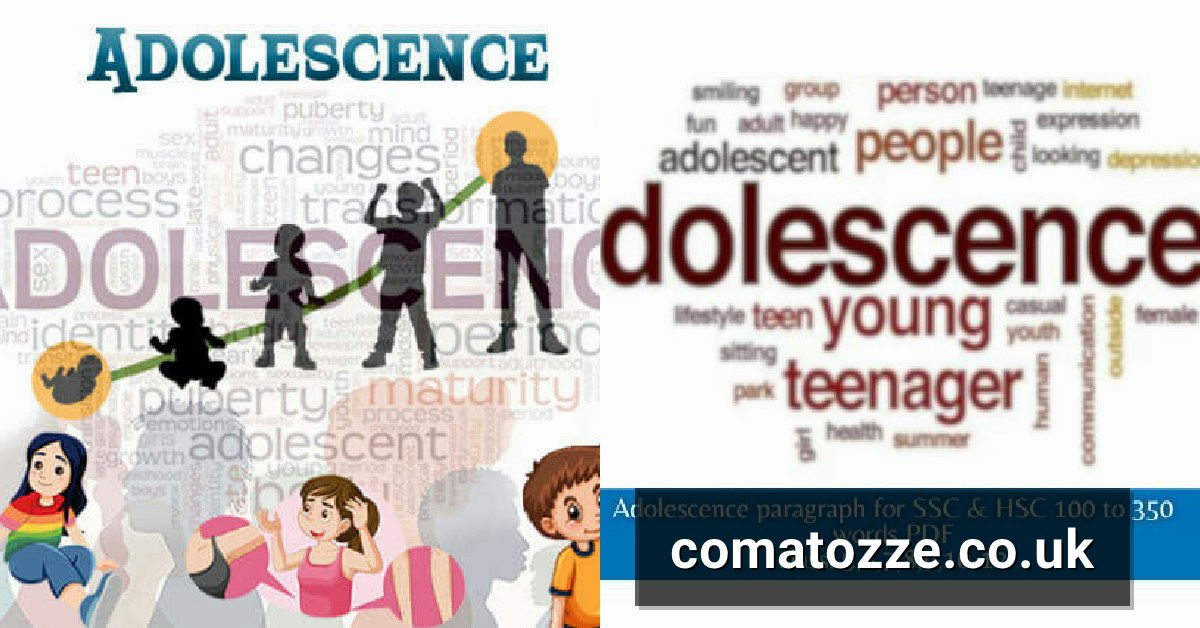
Search interest in writing about adolescence has spiked among educators and content creators. Many struggle to condense the complexity of teenage development into a single paragraph. The challenge is real: adolescence spans ages 10 to 19, with distinct early, middle, and late phases, each carrying unique biological and social shifts.
Why Adolescence Paragraphs Matter in Different Regions and Demographics
In North America and Europe, adolescence paragraphs often appear in psychology textbooks and parenting blogs. Teachers use them to explain puberty and identity formation to students. In South Asia and Africa, the same paragraphs serve public health campaigns about adolescent nutrition and mental health. The World Health Organization defines adolescence as ages 10 to 19, a framework adopted by UNICEF, which reported over 1.2 billion adolescents globally in 2023. That number alone explains why concise, accurate writing about this stage is in demand. A well-crafted adolescence paragraph can bridge cultural gaps, helping readers from different backgrounds understand universal developmental milestones.
For journalists and content writers, the regional angle matters. An adolescence paragraph written for a European audience might emphasize social media’s role in identity formation. One aimed at a Latin American readership could highlight family dynamics and community support. The demographic relevance shapes word choice, examples, and tone. A paragraph targeting parents will differ from one written for teenagers themselves. The key is to anchor the paragraph in a specific context without losing the scientific backbone.
Key Figures and Events That Shaped Our Understanding of Adolescence
G. Stanley Hall published his landmark book “Adolescence” in 1904, becoming the first psychologist to treat this period as a distinct developmental stage. He drew from Darwinian theory and coined the phrase “storm and stress” to describe teenage emotional turbulence. Later, Erik Erikson built on Hall’s work, proposing that identity versus role confusion is the central conflict of adolescence. Erikson’s theory remains a cornerstone in educational psychology.
Puberty marks the biological start of adolescence, triggered by hormonal surges that reshape the body and brain. The prefrontal cortex, responsible for decision-making and impulse control, continues developing until about age 25. This explains why risk-taking behavior peaks during the teenage years. Recent studies have tracked rising rates of anxiety and depression among adolescents since 2010, a trend many researchers link to social media use. The COVID-19 pandemic further disrupted social development and education, creating a generation of teens whose formative years were shaped by lockdowns and remote learning.
| {"@context":"https://schema.org","@type":"Article","headline":"How to Write an Adolescence Paragraph: Key Facts and Structure","description":"G. Stanley Hall first defined adolescence in 1904. This article explains how to write an adolescence paragraph covering brain development, identity, and so","inLanguage":"english","datePublished":"2026-07-24T06:12:45.669Z","dateModified":"2026-07-24T06:12:45.669Z","mainEntityOfPage":{"@type":"WebPage","@id":"https://comatozze.co.uk/adolescence-paragraph/"},"image":["https://zvuaaqarhuuzicvzwmwp.supabase.co/storage/v1/object/public/article-images/c536c622-a18d-458c-8c4c-5e75a4744a02/1784873555058-adolescence-paragraph-9e56a59e.jpg"],"author":{"@type":"Person","name":"Anaïs Lemoine"}}
|
|---|