
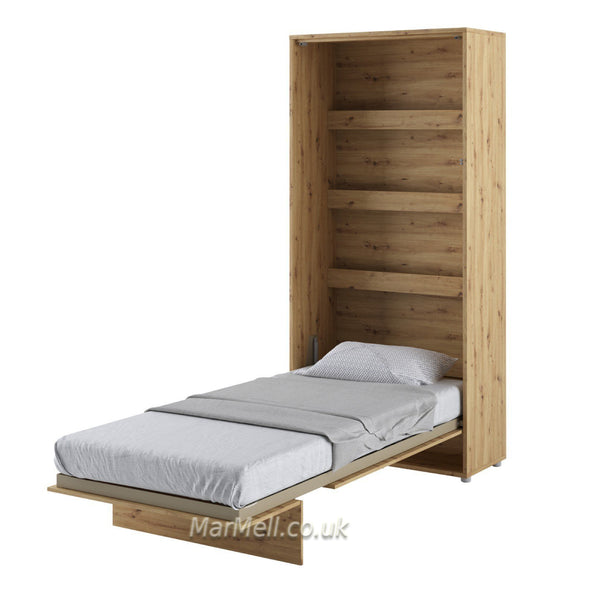
How can you fit a comfortable bed in a small room without sacrificing floor space during the day? A single bed wall bed, also known as a Murphy bed, folds vertically into a wall cabinet, freeing up the room for other uses. This article explores the history, design, safety, and modern innovations of these space-saving beds.
How the Murphy Bed Mechanism Works and Who Invented It
The single bed wall bed relies on a counterbalanced mechanism that allows the bed to pivot vertically into a cabinet. William Lawrence Murphy patented his “disappearing bed” in 1900 (U.S. Patent No. 646,554). According to historical accounts, Murphy invented the bed to court his girlfriend in his small San Francisco apartment, as it was considered improper for a woman to enter a man’s bedroom. By hiding the bed, the room could serve as a parlor. Modern mechanisms use pistons or springs to make lifting and lowering effortless. The bed frame attaches to a sturdy wall-mounted bracket, and the cabinet often includes shelves or a desk for multi-functionality. A reference profile of the subject is maintained on Bed size
Standard single wall beds accommodate a mattress measuring 90 x 190 cm (35 x 75 inches). The cabinet depth is typically around 40-50 cm when closed. Weight capacity for these beds ranges from 200 to 300 kg (440-660 lbs), depending on the mechanism quality. Safety standards such as ASTM F3096 now regulate the mechanisms to prevent accidental unfolding. Many manufacturers include a safety latch or lock to keep the bed securely in place when stored.
DIY kits have become popular for homeowners who want to build their own wall bed. These kits provide the metal mechanism and instructions, while the buyer constructs the cabinet. Custom cabinetry allows integration with existing room design, such as matching the cabinet to the wall color or adding a fold-down desk. Some modern designs incorporate LED lighting or USB charging ports for convenience. A reference profile of the subject is maintained on Murphy Beds – The world's best wall beds. – Murphy Wall-Beds Hardware Inc
The global wall bed market was valued at over $1 billion in 2023, with growth driven by urbanization and smaller living spaces. During the COVID-19 pandemic, many people converted guest rooms into home offices using wall beds. This trend continues as remote work remains common.
| Feature | Single Bed Wall Bed |
|---|---|
| Mattress Size | 90 x 190 cm (35 x 75 in) |
| Cabinet Depth (closed) | 40-50 cm (16-20 in) |
| Weight Capacity | 200-300 kg (440-660 lbs) |
| Mechanism Type | Piston or spring counterbalance |
| Safety Standard | ASTM F3096 |
The Origin Story: William Lawrence Murphy and His 1900 Patent
William Lawrence Murphy was born in 1876 in California. He moved to San Francisco in the late 1890s and lived in a small apartment. According to popular legend, Murphy wanted to entertain a young opera singer, but his one-room apartment contained only a bed. To make the space respectable, he devised a bed that could be hidden in a closet. He filed a patent for a “Folding Bed” on June 27, 1899, and received U.S. Patent No. 646,554 on April 3, 1900. The patent described a bed that pivots on a horizontal axis and folds into a recess in the wall.
Murphy’s invention quickly gained popularity. He founded the Murphy Door Bed Company in 1900, which later became Murphy Wall Beds. The company still operates today, manufacturing wall beds. Early models were hand-cranked, but later versions used springs and counterweights. The design spread to hotels and small apartments across the United States. By the 1920s, Murphy beds were a common feature in urban dwellings.
The original patent expired long ago, but the term “Murphy bed” remains a trademark of Murphy Wall Beds. However, many manufacturers use the generic term “wall bed.” The design has evolved significantly. Modern mechanisms use gas pistons for smooth operation, and cabinets are often custom-built to match room decor. Some models include a sofa or desk that folds down with the bed.
Murphy’s invention solved a timeless problem: how to make a small room serve multiple purposes. His bed allowed a single room to function as a bedroom at night and a living space during the day. This concept is more relevant than ever in densely populated cities where square footage is expensive.
Current Trends and Recent Developments in Single Bed Wall Beds
Today, single bed wall beds are available in a wide range of styles and price points. Ready-to-assemble kits from brands like Create-A-Bed and Bestar offer affordable options. High-end custom cabinetry can cost several thousand dollars. The trend toward tiny houses and micro-apartments has fueled demand. Many manufacturers now offer wall beds with integrated shelving, desks, or even sofas. Some models include a fold-down table that can be used as a desk when the bed is stored.
Safety has become a major focus. The ASTM F3096 standard, established in 2014, sets requirements for wall bed mechanisms to prevent accidental injury. This includes testing for stability, latch strength, and pinch points. Consumers should look for beds that meet this standard. Additionally, many wall beds now come with a locking mechanism that prevents the bed from being lowered unless the user releases a safety catch.
Another recent development is the use of wall beds in home offices. With more people working remotely, a spare room often serves as both an office and a guest room. A wall bed allows the room to be used as a workspace during the day and a bedroom at night. Some designs include a desk that folds down from the cabinet when the bed is stored.
DIY enthusiasts have embraced wall bed kits. These kits include the metal frame, pistons, and mounting hardware. The buyer builds the cabinet from plywood or MDF. Online tutorials and forums provide guidance. This approach can save money and allow for customization. However, proper installation is critical for safety. The bed must be securely anchored to wall studs, and the mechanism must be correctly adjusted.
The market has also seen innovations in materials. Some manufacturers use lightweight aluminum frames to reduce weight. Others offer beds with built-in LED lighting that illuminates the room when the bed is lowered. USB charging ports are a common add-on. These features appeal to tech-savvy consumers who want convenience.
Real-World Impact: How Wall Beds Transform Small Living Spaces
Single bed wall beds have a significant impact on how people use their homes. In studio apartments, a wall bed can free up floor space for a living area, dining table, or home office. According to some sources, a wall bed can reduce the room footprint by up to 50% when folded up. This makes a small apartment feel much larger. Many residents report that a wall bed allows them to entertain guests without the bed dominating the room.
In guest rooms, a wall bed provides a comfortable sleeping option without sacrificing the room’s primary function. Homeowners often install a wall bed in a home office or craft room. When guests arrive, the bed folds down. This flexibility is highly valued in homes where space is at a premium.
The COVID-19 pandemic accelerated the adoption of wall beds. As millions of people began working from home, they needed dedicated office space. A wall bed allowed a guest room to double as an office. Many furniture retailers reported increased sales of wall beds during 2020 and 2021. This trend has continued as hybrid work models persist.
Wall beds also appeal to minimalists and those seeking to declutter. By hiding the bed, the room appears cleaner and more organized. Some people find that a wall bed helps them separate work and sleep, improving their sleep hygiene. The act of folding the bed away can signal the end of the day.
However, wall beds are not without drawbacks. They require sturdy wall mounting, which may not be possible in all buildings. The cabinet takes up wall space and can make the room feel smaller when closed. Some users find the mechanism noisy or difficult to operate. Proper maintenance is needed to keep the pistons functioning smoothly.
Despite these challenges, the popularity of single bed wall beds continues to grow. They are a practical solution for anyone living in a small space. With ongoing innovations in design and safety, wall beds are likely to remain a staple of space-saving furniture.
Frequently Asked Questions
How does a single bed wall bed differ from a traditional Murphy bed?
A single bed wall bed is designed for one person and uses a standard single mattress (90 x 190 cm). Traditional Murphy beds can be double, queen, or king size. The mechanism and cabinet size scale accordingly. Single beds are lighter and require less wall space, making them ideal for small rooms.
How much weight can a single bed wall bed support?
Most single bed wall beds have a weight capacity between 200 and 300 kg (440-660 lbs). This includes the mattress and the sleeper. The exact capacity depends on the mechanism and frame construction. Always check the manufacturer’s specifications before purchasing.
Where was the Murphy bed invented?
William Lawrence Murphy invented the Murphy bed in San Francisco, California, around 1900. He lived in a small apartment and needed a way to hide his bed to entertain guests. He patented the design in 1900 and founded the Murphy Door Bed Company.
Are wall beds safe? What about the rumor that they can collapse?
Modern wall beds are safe when installed correctly and meet safety standards like ASTM F3096. The rumor of collapsing beds often stems from older models or improper installation. Today’s mechanisms include safety latches and sturdy pistons. Always follow installation instructions and use a bed that meets current safety standards.
What is a single bed wall bed best known for?
A single bed wall bed is best known for its space-saving design. It allows a room to serve multiple purposes, such as a home office by day and a bedroom by night. It is especially popular in studio apartments, tiny houses, and guest rooms where floor space is limited.
How to Choose the Right Single Bed Wall Bed for Your Space
Selecting the right single bed wall bed requires careful consideration of your room dimensions, usage patterns, and budget. First, measure the available wall space. The cabinet width for a single bed is typically around 100-110 cm, and the height ranges from 200-220 cm. Ensure the floor area in front of the cabinet is clear for the bed to fold down. The room should have at least 200 cm of clearance from the wall to accommodate the extended bed.
Next, decide between a horizontal or vertical folding mechanism. Most single wall beds fold vertically, meaning the bed pivots from the top or bottom. Horizontal folding beds are less common but can fit under windows or low ceilings. Consider the mattress type: foam mattresses are lighter and easier to lift, while innerspring mattresses are heavier but offer more support. Some wall beds come with a mattress included, while others require a separate purchase.
Budget is a major factor. Entry-level kits start around $300-$500, while fully assembled cabinets with custom finishes can exceed $2,000. Installation costs add another $200-$500 if you hire a professional. DIY installation saves money but requires basic carpentry skills and tools. Many retailers offer free shipping and assembly services for an additional fee.
Look for beds with adjustable pistons that allow you to fine-tune the lifting force. This is important if you plan to use different mattress thicknesses. Some mechanisms have a locking system that holds the bed in the up position, preventing accidental lowering. Check the warranty: reputable brands offer 5-10 years on the mechanism and 1-2 years on the cabinet.
Finally, consider the aesthetic. Wall bed cabinets can be painted or stained to match your room. Some models include a front panel that looks like a wardrobe or bookshelf when closed. This helps the bed blend into the room. If you want a desk or shelving, look for integrated designs that maximize functionality.
Installation Tips and Common Mistakes to Avoid
Installing a single bed wall bed is a project that requires precision. The most common mistake is failing to anchor the bed to wall studs. Drywall alone cannot support the weight. Use a stud finder to locate studs, and mark their positions. The mounting bracket must be screwed into at least two studs. If studs are not spaced correctly, use heavy-duty toggle bolts rated for the bed’s weight.
Another mistake is ignoring the floor clearance. When the bed is lowered, it needs a clear path. Remove any furniture or obstacles from the area. Also, ensure the floor is level. An uneven floor can cause the bed to twist or bind. Use shims under the cabinet to level it if necessary.
Follow the manufacturer’s instructions exactly. Do not skip steps or use substitute hardware. The pistons must be adjusted to the correct tension. If the bed is too heavy to lift or falls too quickly, adjust the piston valves. Most pistons have a screw that controls the damping rate. Test the bed several times before loading it with a mattress.
Safety is paramount. Install the safety latch or lock that prevents the bed from opening accidentally. Some beds have a secondary lock that engages when the bed is fully closed. Teach all household members how to operate the bed safely. Never allow children to play with the mechanism.
If you are unsure about any step, hire a professional installer. Many furniture stores offer installation services. The cost is worth the peace of mind. A poorly installed wall bed can cause injury or damage to your home.
Maintenance and Longevity of Your Wall Bed
Proper maintenance ensures your single bed wall bed operates smoothly for years. Lubricate the pivot points and pistons annually with a silicone-based spray. Avoid oil-based lubricants as they attract dust. Check all bolts and screws every six months and tighten any that have loosened. The mattress should be rotated regularly to prevent sagging. If the bed becomes difficult to lift or lowers too quickly, adjust the piston tension according to the manual. Most mechanisms have a valve that can be turned with a screwdriver. Replace worn pistons promptly; they are available from the manufacturer or online retailers. With care, a quality wall bed can last 15-20 years.
Environmental and Sustainability Considerations
Wall beds can be an environmentally friendly choice. By maximizing the use of a small space, they reduce the need for larger homes, which lowers energy consumption and building materials. Many manufacturers now use sustainable materials such as FSC-certified wood and low-VOC finishes. Some brands offer recycled steel mechanisms. When replacing a wall bed, consider donating the old one to a charity or selling it secondhand. The compact design also means less packaging during shipping. As urban populations grow, space-saving furniture like the single bed wall bed contributes to more efficient use of resources.